Interior Painting in Cambridge, MA
Interior paint does more than change a color. It covers old plaster repairs, seals rooms that have taken on moisture, and pulls a house that feels dated back into shape. Homeowners across Cambridge all the way from the Victorians of West Cambridge to the three story homes of Cambridgeport call us when a room needs more than a fresh coat. We figure out what your walls and trim actually need first and then prep and paint so the finish holds up instead of showing every flaw underneath.
Get Your Interior Painting Estimate Today
Tell us what rooms you’re looking at and we’ll come out and give you a free no hassle estimate. We’ll check the condition of your walls and trim, look for water damage, failed plaster, or old oil-based finishes that need special handling, and give you a straight answer on what the job actually involves. If a room only needs two coats we’ll tell you that too. You’ll get a clear quote that you can trust and an honest explanation of what’s driving it.
Prefer to talk it through? Call us anytime at the number below.
What Interior Painting Involves
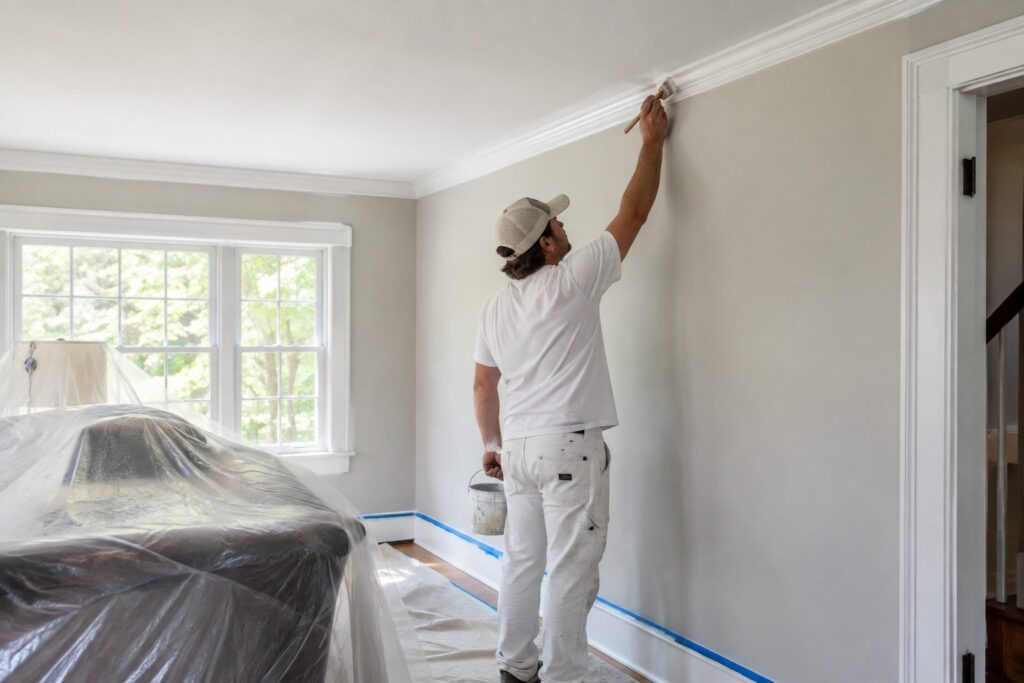
Painting a room the right way starts with the surface not the brush. We look at what we’re dealing with first. Plaster that’s cracked or keyed loose from the lath, drywall with old patches that were never sanded flat, trim that’s been coated in oil-based paint since the 1950s, or walls that have taken on moisture and started to flake. We determine the prep based on your specific and personal home condition. That may mean skim coating a wall that’s too far gone to patch, sanding and priming oil-based trim so latex will actually bond to it, sealing water stains so they don’t bleed through or just a clean wash and two coats when the surface is already sound. In Cambridge’s older homes especially what’s under the paint matters more than what goes on top of it. We prep the surface properly so the finish lasts instead of failing in a year.
When to Repaint the Inside of Your Home
Not every room needs repainting on a schedule but some shouldn’t wait. Call us if you see paint peeling or bubbling which usually means moisture is getting in somewhere. Plaster that’s cracking in a pattern rather than a single hairline, water stains on a ceiling, or trim where the finish has gone chalky and started to chip is reason to call right away. Rooms that take heavy use like kitchens, bathrooms, and stairwells wear out faster than bedrooms. If you’re selling your home a fresh interior paint is one of the few things that reliably returns more than it costs. If a room is really just dated rather than damaged we’ll tell you that honestly rather than sell you prep work you don’t need.
Insured & Experienced
Interior work means a crew inside your home for days at a time so who does the work matters. We’re fully insured on every project and we back our work in writing. Interior painting is easy to cut corners on because the shortcuts are invisible once the room is finished. A wall that was never sanded or a trim piece painted straight over old oil will look fine on day one but will start peeling within a year. We don’t work that way. We show you what we find and explain what needs prep and what doesn’t. We stand behind our finish. If you’re getting quotes from other painters make sure whoever you hire carries real insurance and is RRP certified if your home was built before 1978.
Frequently Asked Questions
How long does it take to paint the interior of a house?
It depends on scope and condition. A single room with sound walls is usually a day or two. A full interior on a three bedroom home runs about a week and can be longer if there’s plaster repair or oil-based trim that needs sanding and priming. We give you a schedule with the estimate and if we find something during prep that changes it we’ll tell you right away rather than at the end.
Do you have to move all my furniture out?
No. We move what needs moving to the center of the room, cover it, and protect your floors. Smaller items and anything fragile are better off cleared out by you before we start and we’ll tell you exactly what to handle during the walkthrough so nothing gets damaged.
Can you paint over old oil-based trim?
Yes, but not directly. Latex will not bond to oil-based paint without preparation. The trim needs to be cleaned and sanded to break the gloss and primed before painting. Skipping this step is the most common reason painted trim starts chipping within a year.
What kind of paint do you use?
Whatever suits the room and whatever preference you have. Kitchens, bathrooms, and stairwells need a finish that can be scrubbed so we use a higher sheen with better washability there. Bedrooms and living rooms do fine with a flat or matte that hides wall imperfections better. We’ll tell you what we’re recommending and why before we buy anything.